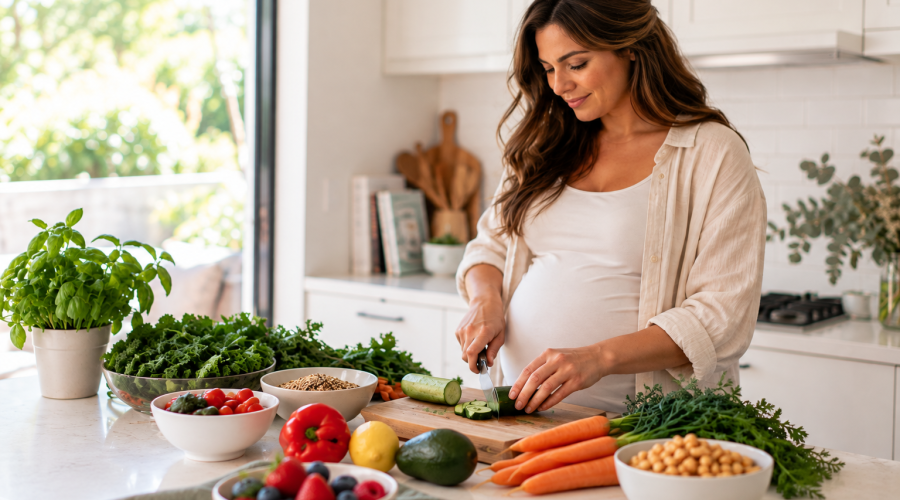
Pregnancy: How to Nourish Yourself.
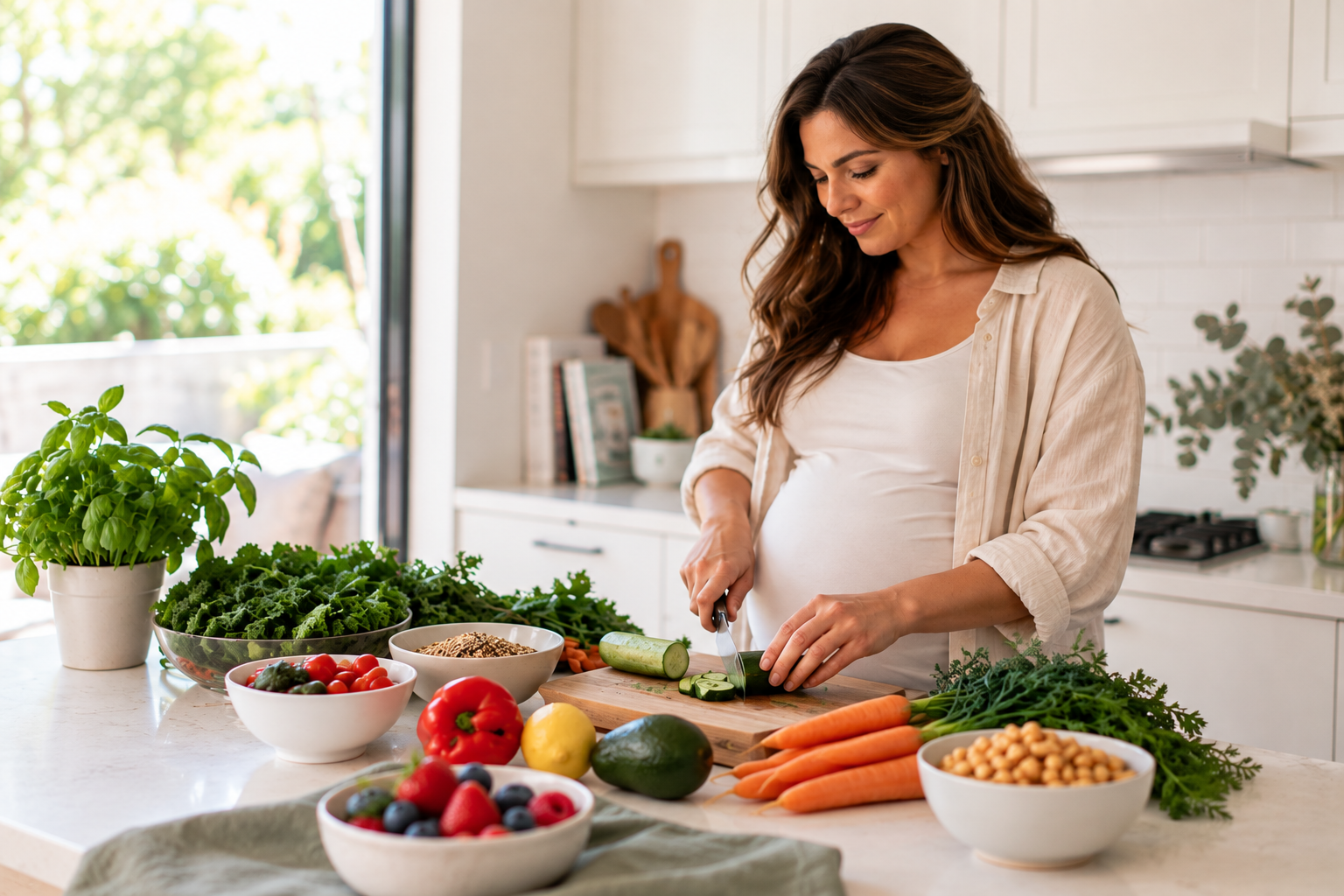
Mum to be preparing her food.
Nourishing Yourself in Pregnancy: Eating Well Without the Pressure.
Pregnancy can bring a lot of conversations about food.
What should I be eating?
What should I avoid?
Am I getting enough nutrients?
Do I need to eat more now that I'm pregnant?
Then there's the reality of pregnancy itself: nausea, food aversions, cravings, tiredness and those days when the meal you had planned suddenly becomes the last thing you feel like eating.
Looking after your nutrition during pregnancy is important, but it doesn't need to become another source of pressure.
Eating well during pregnancy is less about achieving a “perfect” pregnancy diet and more about nourishing yourself and your growing baby as best you can, one day at a time with a balanced diet.
💜 You don't need to “eat for two” in Pregnancy.
It's probably one of the best-known pregnancy sayings, but being pregnant doesn't mean you need to eat twice as much food.
Australian guidance says only a relatively small amount of extra energy is required during pregnancy. Energy needs increase later in pregnancy, particularly during the second and third trimesters, but the emphasis is on choosing nutritious foods rather than simply eating more.
Perhaps a better way to think about it is:
Nourishing for two, rather than eating for two. 💜
💜 What does eating well during pregnancy look like?
There isn't one perfect pregnancy menu.
Australian guidance recommends eating a wide variety of nutritious foods, including:
🌺 Plenty of well-washed vegetables and fruit
🌺 Wholegrain breads and cereals
🌺 Lean meats, poultry, fish, eggs, tofu, legumes, nuts and seeds
🌺 Milk, yoghurt, cheese or suitable alternatives
🌺 Plenty of water
Different foods provide different nutrients, which is why variety and balance can be more useful things to focus on than trying to make every individual meal perfect.
And remember, what eating well looks like may change throughout your pregnancy.
💜 Some nutrients become particularly important in Pregnancy.
Pregnancy increases your body's need for certain nutrients.
Folate (folic acid) is especially important before conception and during early pregnancy and helps reduce the risk of neural tube defects.
Iodine is important for your baby's brain and nervous system development.
Iron helps your body make red blood cells, and your iron requirements increase during pregnancy.
Other nutrients including protein, calcium, vitamin D and omega-3 fats also play important roles in supporting your health and your baby's development.
In Australia, folic acid and iodine supplements are recommended during pregnancy. However, individual needs can vary, and some people may require other supplements.
It's important to speak with your doctor, midwife, pharmacist or dietitian about which supplements and doses are appropriate for you rather than assuming that more is better, some vitamins and minerals can be harmful in excessive amounts.
💜 And then there's the reality — sometimes eating is HARD
We can talk about beautifully balanced meals all day long, but pregnancy doesn't always cooperate.
Nausea can make cooking unbearable.
A food you've loved for years might suddenly turn your stomach.
Your appetite might change completely, or you might suddenly crave something you've barely thought about before.
Appetite changes, food cravings and food aversions are common during pregnancy, and they can make eating a varied diet more challenging.
So if your plate doesn't look like a pregnancy nutrition poster every day, try not to make food another thing to feel pressured about.
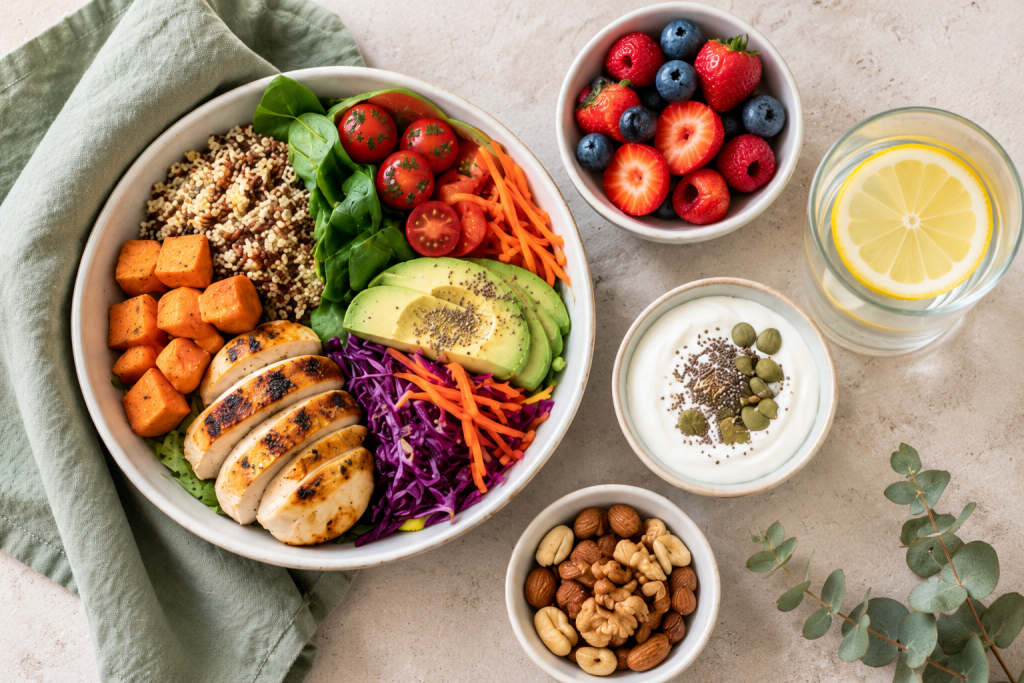
Some days nourishing yourself might look like a colourful meal filled with vegetables, protein and wholegrain.
Another day, it might simply mean finding something you can tolerate and remembering to drink.
If nausea, vomiting, food aversions or changes in appetite are making it difficult to get enough food or fluids, or you're concerned about your nutrition, speak with your doctor, midwife or another maternity healthcare professional.
💜 Food safety matters too in Pregnancy.
Food safety becomes particularly important during pregnancy.
Occasionally pregnancy can make you more vulnerable to some food borne illnesses, including listeriosis. Australian food-safety guidance therefore recommends avoiding certain higher-risk foods and taking extra care with the way food is prepared, stored and handled.
Rather than trying to remember a long list of “allowed” and “not allowed” foods, it's a good idea to check the current Australian pregnancy food-safety guidelines, as recommendations can be specific to how a food is prepared, cooked or stored.
For example, FSANZ advises pregnant people to avoid a number of ready-to-eat foods with a higher Listeria risk and provides safer alternatives. Thorough cooking can also change the advice for some foods.
View the current FSANZ food-safety advice for vulnerable people
💜 What about fish?
Fish can be a nutritious part of a pregnancy diet.
It provides protein, essential omega-3 fatty acids, iodine and important vitamins. Most fish contain only low levels of mercury, so pregnant people do not need to stop eating fish altogether.
However, some larger and longer-living fish can contain higher levels of mercury. Australian guidance therefore recommends limiting particular species, including shark/flake, billfish, orange roughly/deep sea perch and catfish.
Because the recommended amounts differ depending on the species, it's best to check the current FSANZ guidance when choosing these fish.
FSANZ guidance on mercury and fish during pregnancy
💜 Gentle ways to nourish yourself, when you are pregnant.
Eating well during pregnancy doesn't have to mean completely changing the way you live.
Caring for yourself can be found in the little things:
🌺 Keeping a water bottle nearby
🌺 Adding fruit or vegetables where you can
🌺 Having easy, nourishing foods available for tired days
🌺 Including a variety of foods across your week
🌺 Asking for help with cooking or meals when you need it
🌺 Listening to your changing appetite
🌺 Speaking with your care provider when you have questions or concerns
And perhaps just as importantly, letting go of the expectation that every meal needs to be perfect.
Your appetite, energy levels and tolerance for different foods can change throughout pregnancy.
Nutrition is one part of caring for yourself during pregnancy, alongside rest, appropriate movement, emotional well-being, support and regular maternity care.
💜 A little reminder from our Village
There is so much information surrounding pregnancy that it can sometimes feel as though you're constantly being told what you should be doing.
Your pregnancy doesn't need to look perfect.
Nourish yourself where you can. Listen to your body. Ask questions. Accept support.
And if you're worried about what you're eating, struggling to keep food or fluids down, wondering whether you're getting the nutrients you need or have individual dietary requirements, reach out to your maternity healthcare professional or an Accredited practicing Dietitian.
Caring for yourself is part of caring for your growing family. 💜
Growing Your Tribe. Building Your Village.
This article is intended to provide general information and education only and does not replace individual medical, dietary or maternity care advice. Nutritional needs during pregnancy can vary between individuals. Speak with your doctor, midwife, Accredited practicing Dietitian or other qualified healthcare professional for advice appropriate to your circumstances